

Slow Learning That Builds Real Confidence
Why unhurried‚ in-depth learning built on patience‚ repetition and a personal pace creates lasting knowledge and steady self-confidence.
Choosing Depth Over Speed
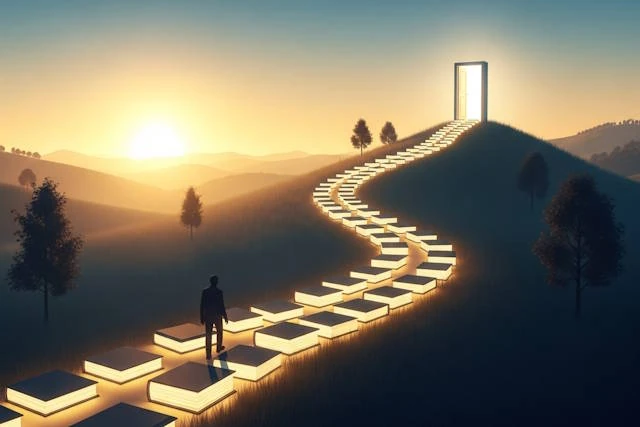
Slow learning focuses on depth. Instead of racing through the material just to cover everything‚ it lingers on every detail in order to really understand it. When you dwell on a single idea‚ an emotional and intellectual connection to it forms. It is a process in which every question gets attention and every answer is examined in depth. That depth builds strong foundations and allows knowledge to rest on stable understanding. What is learned quickly is forgotten quickly‚ but what is learned slowly sinks in and stays.
How Patience Affects the Learning Process
Patience is one of the most important ingredients of learning. It allows you to make mistakes‚ ask questions and try again without pressure. In slow learning there is no sense of failure - there is a process. Those who learn patiently discover that every stage has meaning. Progress may be slower‚ but it is solid. Every small success is built on real understanding‚ not on guessing or imitation. With patience‚ confidence grows and learning becomes an ongoing experience of growth.
The Link Between Learning Pace and Self-Confidence
Speed often creates pressure‚ and pressure creates a fear of making mistakes. In slow learning the pace is controlled by the learners themselves‚ not by an external system. This gives a sense of control that boosts confidence. The more systematically and clearly understanding is built‚ the easier it is to feel confident in what you know. Confidence doesn't come from the number of details you remember‚ but from the ability to explain to yourself why things are true. That confidence stays with you outside the classroom too - at work‚ in conversations and in every area that calls for real understanding.
Experiential Learning as a Tool for Going Deeper
Slow learning lets you experience the material‚ not just read about it. When you apply knowledge‚ run an experiment or try something out yourself‚ a real connection to the subject is formed. Learning turns from something external into something you live through. That way it is etched into memory through experience‚ not through force. Experiential learning doesn't rush to conclusions but explores the path. This is exactly what makes slow learning more effective - it leaves room for the process‚ not only for the result.
How a Calm Environment Affects the Pace of Understanding
To learn slowly and with confidence‚ you need an environment that encourages calm. Natural light‚ relative quiet and open space all affect the ability to concentrate and go deeper. The relationship between teacher and student changes too: less pressure to cover the syllabus‚ more attention to the individual pace. When the space allows for pauses‚ the brain organizes itself better and knowledge is absorbed naturally. In slow learning‚ quiet is part of the process - not a break from it.
The Link Between Repetition and Solid Understanding
One of the central features of slow learning is mindful repetition. Not mechanical repetition‚ but reinforcing ideas until they become clear. Every repetition adds another layer of understanding. It is not a waste of time but a real consolidation of knowledge. When the same principles are learned again in different contexts‚ they become part of the learner's inner language. That is how confidence develops - not thanks to memory‚ but thanks to understanding.
Choosing a Personal Pace in Group Learning
In slow learning the pace is not the same for everyone. Some people need more time to absorb the material‚ while others move ahead faster. Understanding differs from person to person‚ and that is natural. When a group learns together but lets everyone move at their own pace‚ a space of real cooperation is created. Learning becomes less competitive and more supportive. Students feel they can ask questions‚ explain things to others and learn together without fearing constant comparison. That is how a community of learners is formed‚ not just a class of test-takers.
How Slow Learning Affects Creativity
When you don't rush‚ there is room to think. Slow learning lets the mind wander‚ connect ideas from different places and create new insights. It is a space where a mistake becomes an opportunity for something new‚ and waiting for an insight is part of the beauty. It is precisely slowness that invites creativity‚ because it leaves time to think‚ ask and imagine. In a system where everything runs under time pressure‚ this ability almost disappears. Slow learning restores it to its rightful place.
The Link Between Real Understanding and Long-Term Memory
What is learned slowly is absorbed deeply. When you understand the logic behind the material‚ the information is retained over time. Slow learning lets the brain process data at a natural pace‚ integrate it with prior knowledge and build connections. That is how real‚ not temporary‚ memory is formed. This is also why slow learning creates confidence - it is not based on momentary memorization but on deep-rooted understanding that stays with learners for years to come.
In Summary
Slow learning is not opposed to progress - it simply chooses a different route to it. It is learning that respects the human pace and the need to process‚ ask and truly understand. It makes it possible to turn knowledge into logic‚ and logic into wisdom. In a world where speed is seen as success‚ slow learning is an act of self-confidence - a belief that real understanding takes time. In the end‚ it is precisely those who learn slowly who learn deeply‚ and the confidence they build stays steady over time.