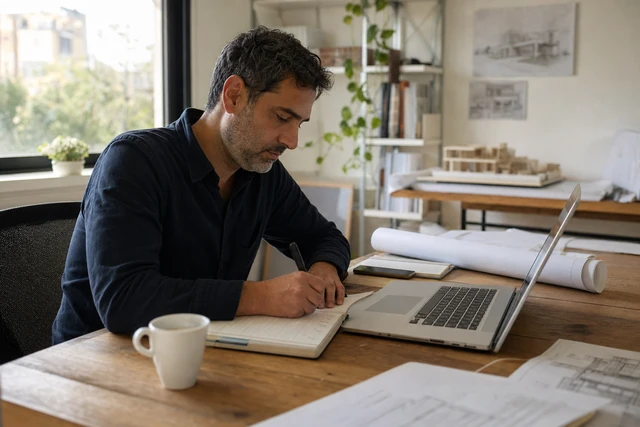

The Small Precision That Separates an Amateur From an Expert
Attention to detail‚ the right tools‚ patience and constant self-checking are what set a true professional's work apart from an amateur's.
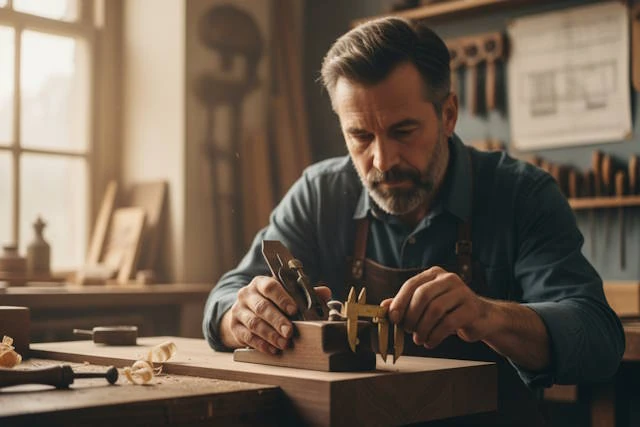
The Importance of Attention to Detail
Precision starts with noticing details. A true expert sees what others skip over - an uneven joint‚ a line that is not symmetrical‚ a small language error or a measurement that is a tenth of a millimeter off. In professional work‚ it is the tiny details that shape the overall impression. The ability to stop‚ check and correct is what creates perfection. An amateur settles for a result that is "good enough"‚ while an expert looks for the feeling that everything is accurate‚ balanced and flawless. This difference in perception shows in every field - from laying tiles to managing a project‚ from installing a system to interior design.
Choosing the Right Tools as a Cornerstone of Professionalism
Work tools reflect a professional's level of precision. An expert knows that a good tool does not only make the work easier but also prevents mistakes. Using high-quality‚ accurate equipment suited to the task makes it possible to keep results consistent. By contrast‚ anyone who compromises on tool quality to save money or time soon discovers that the gap shows in the final result. Precision is not only in the outcome itself but also in choosing the way to get there - and that way starts with the right tool.
The Effect of Experience on Precision
Experience is not measured only in years but in how many times someone stopped to check their own work. An expert knows that precision is gained through trial and error‚ through the ability to see where they went off and how to improve. Every attempt adds a new layer of sensitivity and control. Those who make a point of measuring‚ checking and refining with every project turn precision into a habit. It is a skill that develops over time - and precisely because it takes patience‚ it becomes the hallmark of professionals.
The Link Between Precision and Reliability
Clients sense precision even without fully understanding it. They see clean work‚ hear clear wording or experience a service that runs on an exact schedule - and they understand that the person in front of them can be trusted. Precision creates a sense of confidence. It conveys control‚ care and a serious attitude to the work. When a professional pays attention to every detail‚ they are really telling the client: "nothing here is left to chance". This is the personal responsibility that builds trust. The difference between "roughly" and "exactly" is the difference between a sense of carelessness and a sense of security.
The Importance of Patience and Process
Precision takes time. In a world where everything is done quickly‚ patience has become a rare resource. Yet anyone who wants to reach a truly high level knows that precision is the product of the right pace. An expert is not in a hurry to finish; they are in a hurry to get it right. Every stage of the process calls for checking‚ adjusting and correcting. An amateur‚ by contrast‚ tends to cut corners‚ skip checks and rely on intuition. Patience makes precision possible‚ and precision produces results that last - both physically and in terms of reputation.
The Effect of an Organized Workspace
Precision does not happen in a vacuum. An organized workspace is the basis for being able to work precisely. When the tools are in their place‚ when there is a fixed method for managing projects or a clear order for files and documents‚ concentration rises and mistakes decrease. Disorder leads to inconsistency‚ while an organized environment creates stability. A true expert understands that outer order reflects inner order - and that it is an essential condition for real precision.
The Link Between Precision and Aesthetics
Aesthetics is not only a matter of beauty but of order and harmony. Precision is the basis of professional aesthetics - whether in technical work or in design. A clean joint‚ an exact line or a flawless finish create a sense of completeness that is pleasing to the eye. Even in fields that are not visual‚ such as writing or project management‚ precision shows in the way data is presented‚ in the wording of messages or in close coordination between different parties. Precision creates beauty‚ and precise beauty creates an impression of expertise.
The Importance of Constant Self-Checking
A true expert is never satisfied with the first result. They examine‚ measure and compare. Self-checking is one of the most important tools for maintaining precision. Every small mistake that is learned from adds understanding and keeps it from happening again. The ability to stop and look at the work from the outside - as if you had not done it yourself - is what allows you to grow. Precision is a process of continuous improvement‚ not a goal you reach once and for all.
The Effect of a Professional Approach on Work Quality
Precision does not come only from talent or training but from an approach. An expert treats every job with the same seriousness - small or large. They know that every piece of work represents them‚ so they do not allow themselves to give up a high standard of finish. An amateur sees the work as a temporary task; an expert sees it as an expression of professional identity. This approach affects every detail - from the first line of an email to the last cut in wood or concrete.
In Summary
The small precision that separates an amateur from an expert is not only a matter of technique but of character. It is a habit that starts in the mind and continues in action - attention to detail‚ patience with the process‚ a love of order and perfection. Those who understand that perfection is made of tiny details turn precision into a professional value. It is not measured in time or quantity but in quality and a sense of completeness. In a world full of speed and imitation‚ precision is the clearest sign of true expertise - the thing that separates work that stands the test of time from work that is forgotten right after it is done.