

What Happens When a Coach Changes the Approach Mid-Game
How a change of tactics in the middle of a game affects the mood‚ trust and confidence of players‚ and why adapting in time marks a true leader.
Recognizing What Isn't Working
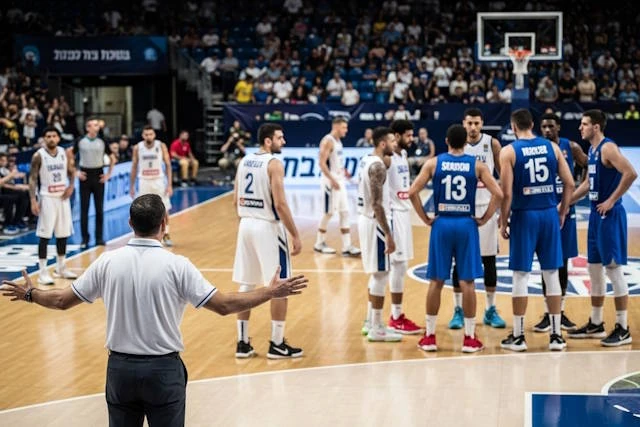
A good coach knows how to recognize‚ in real time‚ when the original plan isn't working. It is a charged moment‚ when a decision has to be made: keep insisting on what was planned in practice‚ or listen to what is happening right in front of you. The crowd may not see it‚ but sometimes a single look between coach and player is enough to understand that something has to change. That recognition is not an admission of failure - it is actually a sign of a deep understanding of the game. Change begins with the ability to admit that the opponent has surprised you‚ that the team is tired or that the players simply need something different.
Changing the Approach as an Emotional Process‚ Not Only a Tactical One
When a coach changes the approach‚ he is not just changing the formation on paper. He is changing the team's energy. If until now the emphasis was on control and pressure‚ it may be time to let go and give the players more creative freedom. If the emphasis was on careful defense‚ it might be worth picking up the pace and attacking instead. Beyond that‚ the change is also an emotional test - for the coach himself and for the players. They need to believe that such a change comes not from fear but from faith in their ability to adapt to the situation. When that happens‚ the whole team opens up again and discovers strengths that were not visible before.
The Effect on the Players on the Court
Players feel it immediately when the coach changes the approach. If it is done with confidence‚ they are lifted by it. They move differently‚ work harder and rediscover the joy of the game. A change made out of confusion or despair‚ on the other hand‚ breeds distrust. That is why the way the coach delivers the message matters as much as the change itself. A few words‚ a confident look or a small gesture can be enough to carry the team with him. Sometimes the right change at the right moment makes the players realize that the coach doesn't just see the game - he feels it together with them.
The Coach as the Psychologist of the Moment
Beyond the professional side‚ a coach has to read the players' state of mind. Are they tense? Disappointed? Indifferent? A change of approach in the middle of a game is sometimes meant not to change the score but to give the players back the feeling that they can do it. At such a moment the coach becomes not only a leader but the team's psychologist. He projects calm and sends a quiet message that everything is under control - even when the score is against him. This nonverbal communication has as much impact as detailed instructions. It is what separates coaches who react from coaches who lead.
The Link Between Flexibility and Trust
A successful change of approach is only possible when the coach and the team have built solid trust in advance. Players who feel secure don't see change as a threat but as an opportunity. They understand that the coach is not trying to "save the situation" but to find a way that will work better for everyone. It is a partnership in which each side relies on the other. The coach believes the players can handle an instant change‚ and the players believe the coach sees further than they do. That flexibility becomes the magic that holds a team together over time.
When the Change Works and Its Impact Reaches Beyond the Court
There are moments when a change of approach transforms an entire game. A team that lacked confidence suddenly starts playing freely‚ the defense settles‚ the attack sharpens and the crowd feels the momentum. But beyond the result‚ the real impact of such a change is on the mindset. The team learns that it can cope with change‚ that it is not fragile but flexible. That ability carries on beyond the court - into practice‚ into daily routine and even into the players' personal lives. It teaches them a simple but powerful principle: change is not a danger but part of growth.
Mistakes Made When Change Comes Too Late
Sometimes the fear of change is costly. Coaches who stick to the original plan even when it isn't working are afraid of looking inconsistent or insecure. But it is exactly this conservatism that can miss the moment when the game could have turned around. In such cases the players sense the stagnation and lose energy. The game becomes predictable‚ the opponent takes advantage‚ and the team looks lifeless. Sometimes a single change - even a small one - could have saved the whole game.
Changing the Approach as a Result of Listening
The greatest coaches are the ones who know how to listen. Not only to statistics or assistant coaches‚ but to the court itself. To the murmurs of the players‚ to the voices from the stands and to their own feelings. Real listening makes it possible to spot in real time what the numbers don't reveal: fatigue‚ tension‚ loss of focus or simply a shift in momentum. When a coach knows how to listen‚ he recognizes the moment to loosen up or‚ on the contrary‚ to tighten things. It is a rare quality‚ but it is what makes the difference between a rigid approach and courageous leadership.
The Ability to Learn from Change
Even if the change of approach didn't lead to a win‚ it didn't fail. On the contrary - it teaches the team and the coach more than any "perfect" game. Through such changes future patterns are formed‚ intuition develops‚ and the ability to recognize in time what works and what doesn't is born. The next game will already look different‚ because the team has learned to adapt. That may be the most important outcome of a change of approach - not the win‚ but the ability to renew itself every single time.
In Summary
When a coach changes the approach in the middle of a game‚ he is not only changing the way the team plays - he is changing the way it thinks. It is an act of courageous leadership‚ of listening and of trust. Such a change doesn't always bring an immediate win‚ but it almost always lays the foundation for real growth. Because in the end‚ a coach who is willing to change teaches his team that it can change too. And the game‚ like life‚ belongs to those who dare to adapt in time.